
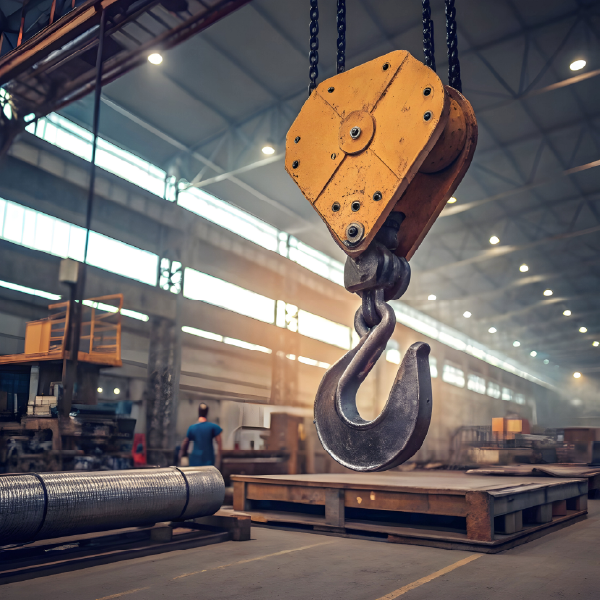
New-Tonne Design & Manufacture
Industrial cranes and hoists are built to lift heavy loads with repeatable performance, strict safety controls, and long service life. While the product is often described by capacity and speed, the real value is created during the design and manufacturing stages—where engineers translate real operational requirements into engineered strength, control accuracy, and dependable motion.
A well-designed crane or hoist doesn’t just meet a maximum load rating; it is engineered for the full range of duty cycles it will experience. That means accounting for how often it will lift, how fast it accelerates, how loads start and stop, and how the environment affects components over time.
Requirements Definition: Duty, Loads, and Application Fit
The design process begins with requirements. Engineers define key performance targets such as:
- Maximum rated load and test loads
- Lift height and travel distances
- Working speed and positioning accuracy
- Cycle frequency and duty rating (how intensively it will operate)
- Environmental conditions (indoor, outdoor, dust, moisture, chemicals)
- Installation constraints and available mounting options
The UK’s Overhead Crane Specialists
Get in touch today for a tailored quote for your crane and hoist needs. See how our bespoke design and manufacturing services can be shaped to your exact requirements.
This stage is critical because industrial equipment typically operates under dynamic conditions. Loads may shift slightly, approach the crane with variable angles, and be started or stopped frequently. The equipment must handle not only peak force, but also fatigue and cumulative stress from repeated cycles.
Structural Engineering: Strength, Stability, and Load Paths
Once duty requirements are established, structural engineering focuses on strength and stability. Industrial cranes and hoists rely on well-defined load paths through frames, girders, booms, masts, end trucks, and supporting structures.
Engineers analyze stresses under static and dynamic conditions including:
- Acceleration and deceleration forces
- Swing and side loads
- Wind or environmental effects (for outdoor equipment)
- Misalignment during positioning
- Shock or impact scenarios during operation
Modern design practice often uses structural modeling and finite element analysis to confirm that critical components—such as welded joints, bearing mounts, pins, and girder sections—remain within safe stress limits throughout the equipment’s service life. Fatigue and vibration considerations are especially important for high-cycle industrial environments.
Hoist and Lifting Mechanism Design: Wire Rope or Chain Systems
The lifting mechanism is a core part of crane and hoist engineering. Depending on application needs, engineers select between wire rope or chain systems.
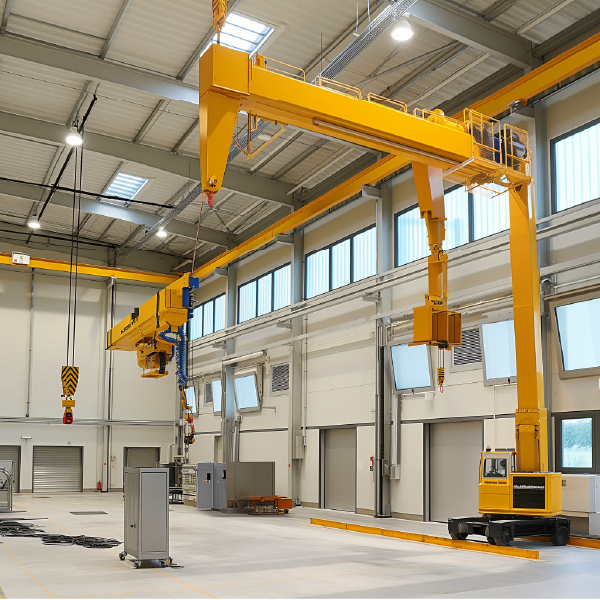
Wire rope designs require careful engineering around:
- Rope reeving configuration
- Drum size and groove geometry
- Rope tensioning and spooling behavior
- Wear points and maintaining correct alignment
- Smooth, efficient load transfer
Chain-based hoists focus on:
- Chain quality, metallurgy, and fatigue life
- Sprocket geometry and alignment
- Friction and wear characteristics
- Lubrication and contamination resistance
In both cases, designers aim to balance capacity, speed, efficiency, and maintainability. A lifting system that is difficult to service can become more expensive over time than one with slightly higher initial cost but better long-term uptime.
Controls, Braking, and Safety Systems
Safe, controlled lifting requires robust braking and dependable motion control. Industrial hoists and cranes use mechanical or electrical braking strategies designed to hold loads securely during normal operation and in power-loss scenarios.
Control design typically includes:
- Limit switches and travel limits to protect against overrun
- Overload protection to reduce risk of structural or mechanical damage
- Motor thermal protection to manage overheating
- Fail-safe behaviors for critical safety functions
- Smooth control to minimize jerk and load swing
Where precise positioning is needed, controls may incorporate improved speed regulation and operator-friendly features that help reduce human error and improve lift accuracy.
Materials and Manufacturing for Durability
Industrial lifting equipment often operates in harsh conditions. Materials and protective measures therefore play a major role in longevity.
Manufacturing decisions may include:
- Corrosion-resistant coatings or galvanized finishes
- Sealed motor and control enclosures
- Selection of bearings and wear components suited to dust and moisture
- Protective strategies for rope/chain wear interfaces
- Engineered clearance and alignment tolerances for consistent operation
Durability is not only about strength—it’s also about how components wear, how easily they can be inspected, and how reliably they can be replaced when maintenance is required.
Fabrication and Quality Assurance in Crane Manufacture
With design finalized, manufacturing turns engineering drawings into reliable hardware. High-quality fabrication depends on disciplined processes, such as controlled cutting and forming, controlled welding procedures, and dimensional verification.
Quality assurance is critical and usually includes:
- Weld inspection and verification of specified quality standards
- Dimensional checks of frames, girders, and end carriages
- Assembly verification for brakes, drives, and lifting components
- Functional testing of limit systems and control behavior
This stage ensures the equipment performs as intended—not only on the day it is delivered, but throughout the lifetime it is built to serve.
Assembly, Commissioning, and Testing Under Real Conditions
After fabrication, cranes and hoists are assembled and commissioned. This step confirms that the engineered design performs correctly as an integrated system.
Commissioning typically involves:
- Operational tests for smooth lifting and lowering
- Verification of braking performance
- Checking limit and safety device operation
- Load testing where required by project specifications and relevant standards
- Final adjustments to improve alignment, smoothness, and control response
The outcome should be equipment that operates confidently, predictably, and safely.
Conclusion: Engineering Reliability You Can Build On
The design & manufacture of industrial cranes and hoists is a structured engineering process that transforms defined duty requirements into strength, motion control, and long service life. When structural engineering, lifting mechanism design, safety systems, and manufacturing quality are aligned, customers benefit from dependable performance, reduced downtime, safer lifting operations, and a system engineered for the realities of industrial work.